
Charity gala backdrops
Nearly every gala backdrop has the same problem: the design is ready, and the biggest sponsor signs a week before the print deadline. Plan for that from the start.
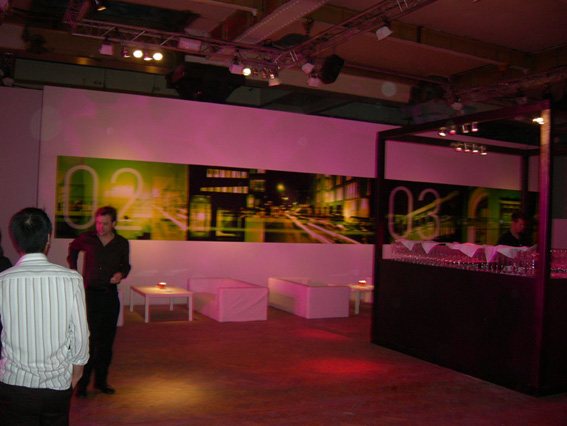
Build the design around what is still moving.
Fundraising teams keep selling tables and sponsorships until the night, which is exactly what they should do. That means the backdrop artwork can never be finished early, unless the layout allows for change. Lock what you can and leave named space for the rest.
| Stage | What gets settled | Who owns it |
|---|---|---|
| 1. Venue check | Wall or floor space, fixing rules and any fire rules for fabrics and structures | Event lead, with the venue |
| 2. Format | Overall size, material and how it will stand | Event lead and printer |
| 3. Master layout | Event name, charity name and brand, and blank slots by sponsor tier | Designer |
| 4. Logo collection | Vector logos, with the sponsor's approval of usage | Sponsorship manager |
| 5. Print cut-off | Final logos in slots. Anyone later goes on a separate board | Agreed with us in your quote |
| 6. Sign-off | One named person approves the proof | Event lead |
Stage 5 is the one to agree with your sponsors in advance. A late sponsor can still have a place on a smaller free-standing board, a roller banner or the screen in the room.
How it will look in photographs
Guests will stand in front of it in evening dress, and their pictures will be shared. That shapes the layout.
- Height. Most logos should sit above shoulder height, or people's heads and bodies will cover them.
- Repeat pattern. A grid of small logos, as on a press wall, puts a logo in nearly every crop. A single large design looks more elegant, but a tight crop can lose the sponsor.
- Flash. Gloss surfaces throw flash back at the camera. Fabric or matt materials are far kinder.
- Dark or pale? Black tie can vanish against a very dark backdrop. Test with a photograph of someone in evening wear.
- Tier order. Sponsors check their relative logo sizes. Agree the rule before you start, and apply it exactly.
Getting it into the ballroom
Hotels and historic venues have rules about what may touch their walls, and many allow nothing at all. Assume a free-standing frame. Ask about lifts, stairs and load-in times, as a long rigid panel will not go round a service corridor. Fabric packs small, which is why it is popular for these events. Compare the options in fabric or PVC backdrop.
Spending donors' money carefully
Every pound on print comes out of what you raise, so make it work twice. Leave the year and the sponsors off the main print, and add them on panels that can be changed. The structure and main graphic can then return next year. You could also offer the backdrop itself as a sponsorship item, so that it pays for itself. Finally, check what your regulator expects to see on fundraising material, such as your charity's registered status. Charity event banners has further ideas.
Printed events, wall to wall.
Your questions.
What if a sponsor only sends a small logo file?
Ask them for a vector version, usually an AI, EPS or PDF. Their design or marketing team should have one. A web-sized logo will look poor at this scale.
Can the backdrop double as a stage set?
Sometimes, but the two have different needs. Stage set pieces are seen from far away and photographed from a distance, so a press-style logo grid may not work. Tell us how the room will flow.
Do you offer a discount for charities?
Discounts are available on quantity. Ask us about your event and we will see how to keep the costs down.