
Static display graphics for museums
Fixed panels, captions and wall graphics outlast the opening week and stay beside objects that need protecting. Plan them with the collection in mind.
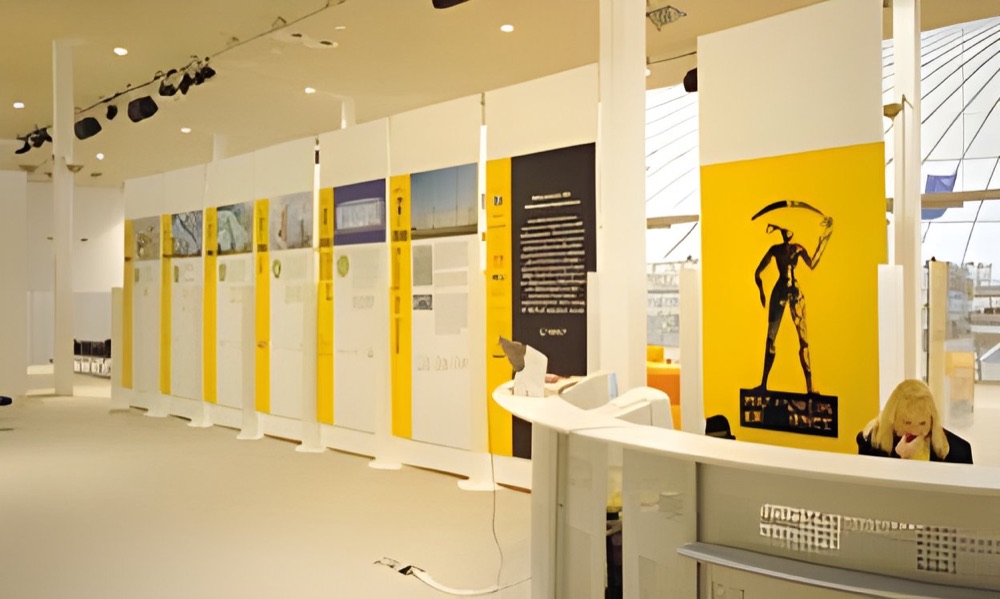
Graphics that live beside objects.
By static graphics, we mean the fixed parts of a gallery: wall panels, captions, timelines, room titles and maps, as distinct from screens or interactives. They tend to stay up for far longer than event print, and they share a room with things that matter more than they do. That changes how you choose materials.
Ask your conservator first
This is the step people leave too late. Some plastics, adhesives and boards can release vapours as they age, and in a sealed case those can harm sensitive objects. Museums often test materials before they go near a collection, and the Oddy test is one widely used method. PVC-based boards, which include Foamex, are one of the things a conservator may want to discuss. Tell us the plan early, so that we can give them the details of what we propose to use.
Choose by location
| Location | Main concern | Questions to settle |
|---|---|---|
| Open gallery wall | Reading in low light | Is contrast strong enough at the room's light level? |
| Inside a display case | Materials near objects | Has the conservator approved board, print and adhesive? |
| Entrance and corridors | Knocks and hands | Would a tougher board or a seal help? |
| Child height | Touching, cleaning | Can the surface be wiped, and with what? |
| Near windows | Fading and glare | Can panels be moved, or will they need replacing? |
Lighting changes the design
Galleries with sensitive objects are often kept dim. A panel that looked fine on a bright office screen can become hard to read in that light. Print a full-size trial, take it to the room and check it at the planned light level. Choose a matt or low-sheen finish, as spotlights will bounce off gloss. Our guide to museum object labels covers the smallest text in the room.
Permanent displays still change
Loans go back, research moves on and names are corrected. Keep dates, lenders and credits on small separate panels, keep your master files, and note the specification of each piece so that a replacement will match.
Access
Text size, contrast, mounting height and alternative formats all affect who can use a display. Take advice from an access specialist or your own access panel, and follow the guidance your organisation uses. For a view of the whole job, see museum exhibition graphics. Any installation is agreed as part of your quote.
Words and walls in galleries.
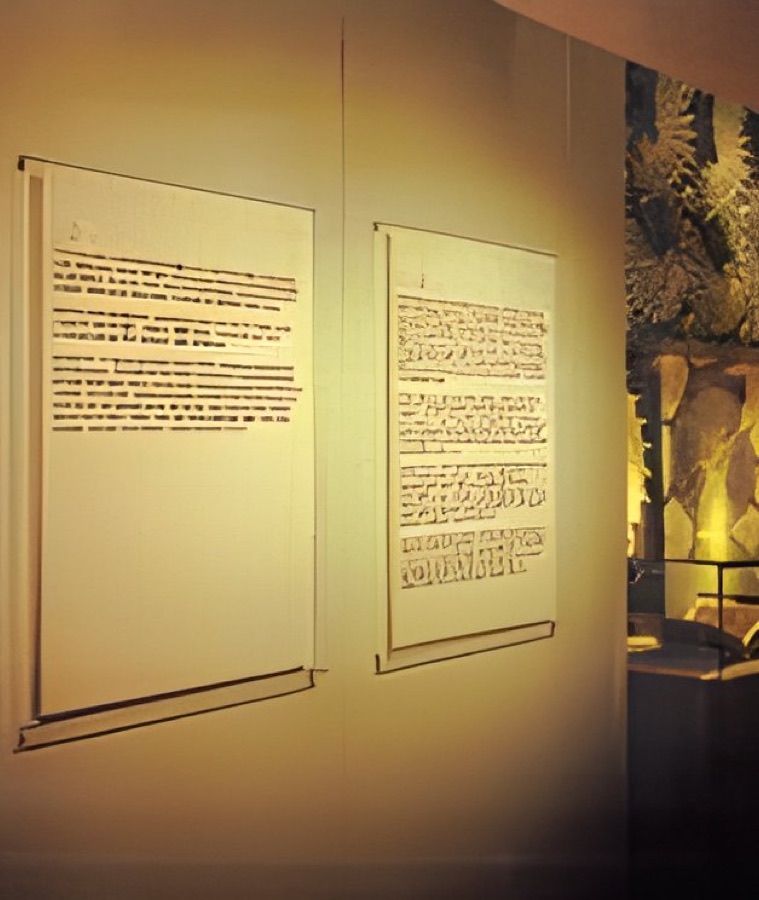
Your questions.
Can you tell me if a material is safe for a display case?
We can tell you what the material is. Whether it is right for your objects is a decision for your conservator, who may wish to test a sample.
Which finish is best for low-light galleries?
Matt or low-sheen surfaces are generally easiest to read, as they avoid bright reflections from spotlights. Test a sample in the room.
Can you reprint one caption from a set?
Yes, if we have the artwork. Keep the original specification with your files so that the new piece matches as closely as possible.