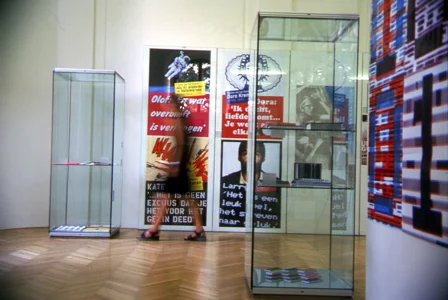
Exhibition displays
Bring your stand together with printed graphics and portable display systems.

Museum exhibition graphics carry the interpretation that turns objects into a story, often in dim rooms and for visitors of very different ages. This page is for curators, exhibition designers and collections staff planning temporary or touring displays.
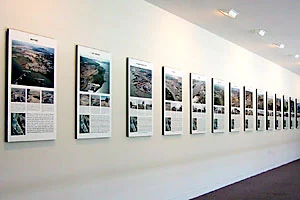
Sensitive objects often mean dim galleries, and that changes how print behaves. Matt finishes avoid glare from spotlights, and dark text on a light ground generally reads more easily than the reverse when lighting is low. Keep labels at a height that suits both wheelchair users and standing adults, and follow your museum's access standards for type size and contrast. Rigid panels from our mounting and laminating service stay flat, while large introductory text can go directly on walls as vinyl.
Exhibitions often rely on old photographs, maps and transparencies that were never intended to appear two metres wide. Originals on film can be digitised through drum scanning, which suits fine detail, though handling requirements for fragile items should be agreed with your collections team first. Clear rights and credit lines before artwork is finished, since permissions can take longer than production. Decide whether to retain scratches and foxing as part of the object's history, or to retouch them. It is a curatorial decision and worth recording.
Some materials and adhesives can release vapours that are unsuitable inside sealed cases, so ask your conservator to approve anything going near collections, and tell us their requirements. For touring shows, exhibition displays need to be designed around crates, repeated handling and venues with different wall sizes, which often favours modular panels over site-specific wall vinyl. Plan for updates too. Replacing one panel after a factual correction is far easier if every panel exists as a separate file.
Matt finishes are usually chosen because they reduce glare from directional lighting. We can supply samples, so check them on site, at the planned light levels and from the angles visitors will actually stand.
Possibly, but materials inside cases need your conservator's approval, as some can affect sensitive objects. Share their requirements with us and we will see what can be documented and supplied for testing.
Bring your stand together with printed graphics and portable display systems.

Give printed graphics the structure and finish they need.
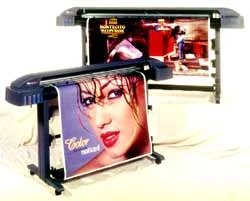
Discuss the digitisation of photographic originals for print and reproduction.
Tell us what you’re making. We’ll help you plan the print.