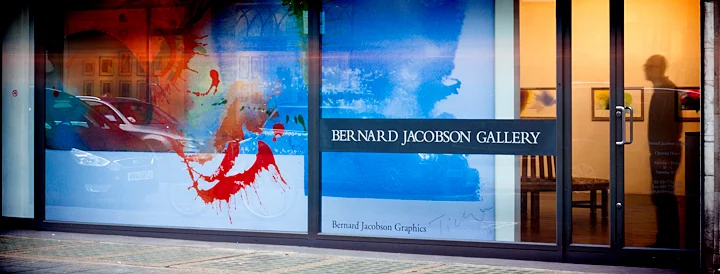
Window graphics
Turn glass into a useful part of your brand.

One-way vision film is a perforated vinyl that shows a full-colour image from outside while people indoors can still see through it. Shops, offices and fleets use it to turn glass into advertising space without losing the view.
The film is covered in tiny holes, with a dark backing behind the printed face. In daylight your eye catches the bright printed surface from outside, while from the dimmer interior the dark backing fades and you look through the holes. The effect depends entirely on light. After dark, with the lights on inside, it can reverse: passers-by may see in and the image weakens. If evening impact matters, consider lighting the outside of the window, or compare it with solid window graphics.
A good part of the surface is hole rather than ink, so the image looks softer and slightly lighter than it does on screen. Bold shapes, strong contrast and large type work well, while fine lines, small print and subtle gradients tend to vanish. Stand back when reviewing a proof, because that is how the window will be seen. Avoid placing key messages across mullions or door frames. Our artwork guide explains how to set up your file for size and bleed.
Water sitting in the perforations can blur the see-through effect until it dries, which is one reason an optically clear laminate is often added outdoors. Ask whether it suits your site, as it can also affect the look. On vehicle graphics, check the road rules on what can cover a window before planning anything near the driver's view, and confirm rear visibility with your fitter. The film also has to be trimmed to the visible glass, so measure inside the rubber seal or frame, not the frame itself.
In daylight, very little, as the bright print dominates. Close up you will notice the dots, and strong interior lighting makes the room more visible. It is a light effect, not a privacy barrier.
It is normally applied to the outside face so the print is not viewed through glass, though inside-mounted versions exist. Tell us if outside access is difficult, and we'll discuss what suits the window.
Turn glass into a useful part of your brand.
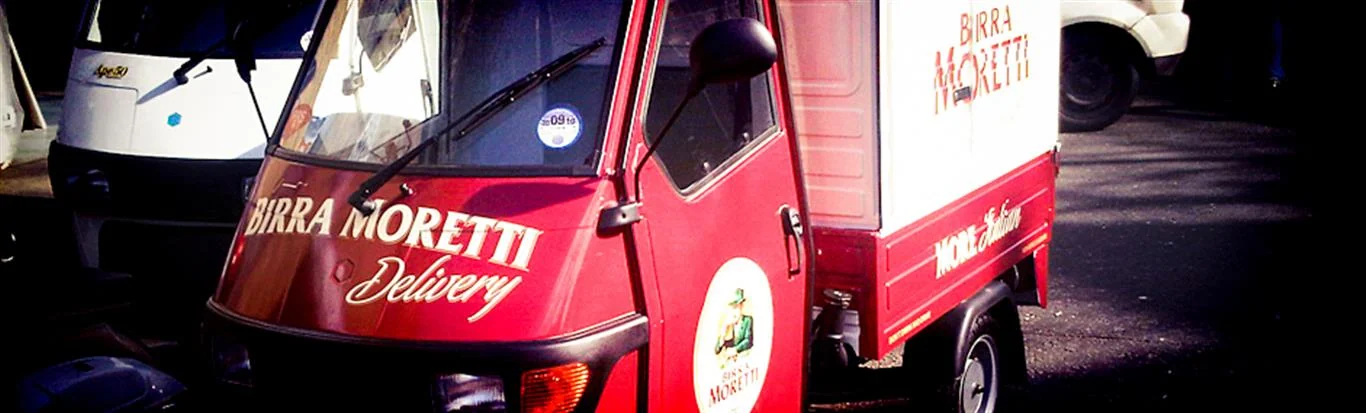
Take your identity on the road with printed vehicle graphics.
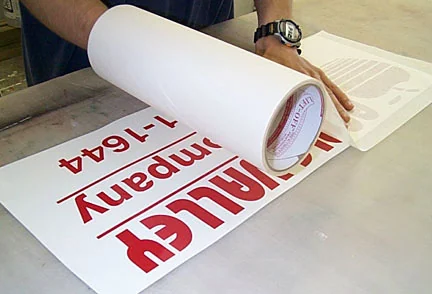
Create adaptable graphics with printed self-adhesive vinyl and cut lettering.
Tell us what you’re making. We’ll help you plan the print.