
Choosing a print size for a wall
Most prints that look wrong on a wall look wrong because they are too small. Six steps and a roll of masking tape will settle the size before you spend anything.
Six steps to the right size.
- Find the anchor. Is there furniture below the picture? If so, that sets the width. If not, the wall itself does.
- Take two thirds. Over furniture, aim for around two thirds to three quarters of its width. On a bare wall, start with around half to two thirds of the clear space.
- Match it to a standard size. Pick the nearest size from the table below, since standard sizes are simple to order, frame and mount.
- Check the height. The centre of a picture usually sits at around 1450mm to 1500mm from the floor. Over furniture, leave a gap of 150mm to 250mm above it.
- Tape it out. Mark the outline on the wall in masking tape. Leave it there for an evening and see it with the lights on.
- Check your image. Only now ask whether the file will stretch that far.
A worked example.
You have a dining room wall 2400mm wide with a 1500mm sideboard against it. Two thirds of 1500mm is 1000mm, so you are looking for a print about a metre wide. 40in x 30in, hung landscape, is 1016 x 762mm, which is very close. A0 at 1189mm would span about four fifths of the sideboard, which is on the generous side but could look deliberate with a strong image.
For height: if the sideboard top is 850mm from the floor and you leave 200mm, the print runs from 1050mm to 1812mm, centred on about 1430mm. That is right where it should be.
| Size | Landscape width | Height | Often suits |
|---|---|---|---|
| A2 | 594mm | 420mm | Alcoves, narrow walls |
| 30in x 20in | 762mm | 508mm | Small sideboards, desks |
| A1 | 841mm | 594mm | Consoles, bedheads |
| 40in x 30in | 1016mm | 762mm | Sideboards, smaller sofas |
| A0 | 1189mm | 841mm | Larger sofas, meeting rooms |
| 60in x 40in | 1524mm | 1016mm | Long walls, reception areas |
Rooms that change the rule.
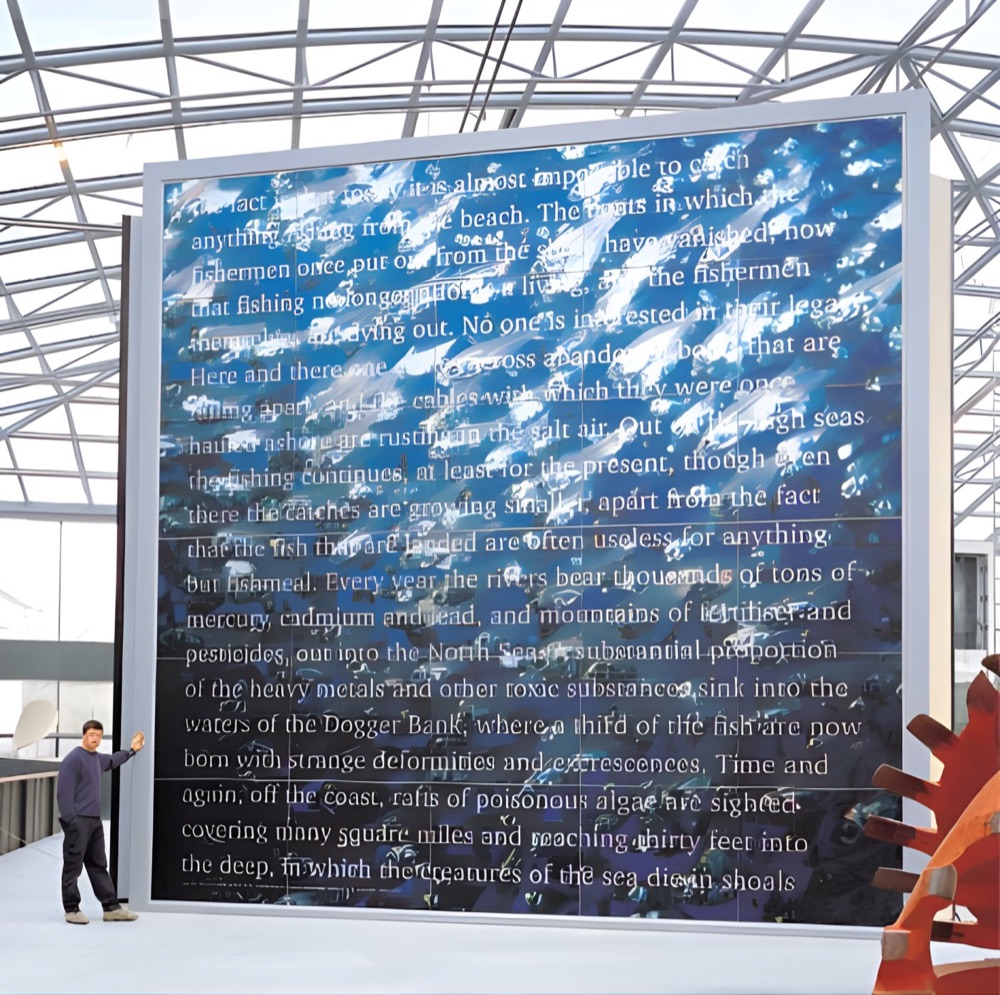
Reception areas and offices. Visitors see the wall from across the room, so you can go bigger than you would at home. If the wall is the first thing people see, consider a full mural instead of a print.
Corridors. You cannot step back, so a big image never reads as a whole. A series of smaller prints works better.
Low ceilings. Portrait prints can make a room feel taller. A wide print can flatten it. Our note on portrait or landscape covers the rest.
Groups count as one.
A set of smaller pieces is measured as a single block, gaps included. Apply the same two-thirds guide to the block as a whole.
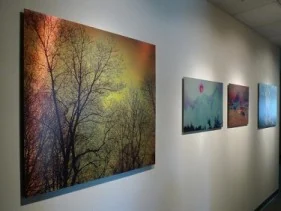
Scale in real rooms.
Your questions.
Should a print be centred on the wall or on the furniture?
On the furniture, if it is close below. The eye reads the two as a pair, even when the wall itself is not symmetrical.
Does a frame change the size I should order?
Yes. A frame and mount can add noticeably to the overall width, so plan the wall around the outer size and work back to the print size.
What about a chimney breast?
Treat the chimney breast as your wall, and leave a clear margin at each side. A portrait print often sits better there than a wide one.