
Portrait or landscape for a print
Your image usually has a natural direction, but the wall can overrule it. Look at both before you crop, because the wrong one wastes the space or loses the subject.
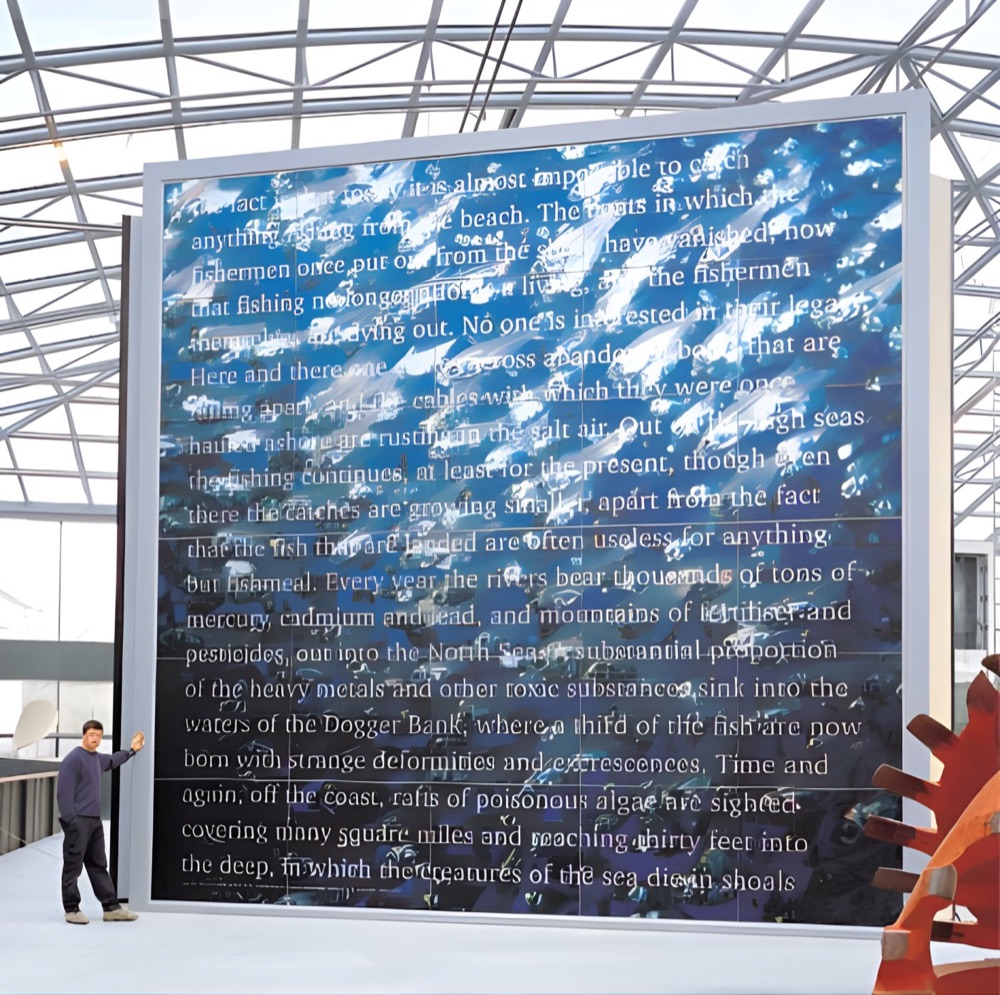
Let the space argue first.
Most people start from the picture. It is better to start with the wall, because you can crop an image, but you cannot move a door. Broad, low walls above sofas, benches and counters want a landscape print. Narrow columns between windows, stairwells and door gaps want portrait. An image that fights the shape of its wall always looks as if it was put there by accident.
A gap between two doors
You have a gap of 1,000mm between two doors, and you want an A0 print. Turned to landscape, A0 is 1,189mm wide, so it will not fit. In portrait it is 841mm wide. That leaves 159mm of spare wall, or just under 80mm either side of the print. It fits, but it will feel tight, so compare it with A1 in landscape, which is 841mm wide and 594mm high, and leaves far more wall above and below. Same width, two different feelings: the first fills the gap, and the second floats within it.
Mark both on the wall with masking tape before you decide. Our guide to choosing a print size for a wall has more on proportions.
Then listen to the image
- Horizons, skylines and groups of people pull towards landscape. Your eye reads them from side to side.
- Single figures, trees, doors and towers pull towards portrait, as the eye travels upwards.
- Text-led posters tend to work better in portrait, because lines stay short and the page reads top to bottom.
- Timelines and panoramas are nearly always landscape, and if they are very wide, look at panoramic prints.
If the image and the wall disagree
You have three options. Crop to the new shape, which works if the subject sits well within the picture. Extend the background with design work, if it is a simple sky or a plain area. Or pick another image. It is rarely worth forcing a landscape photo into a tall crop just because the space is tall. Try a quick crop on your screen first, and look at what you have lost.
A short checklist for displays
| Format | Usual orientation | Why |
|---|---|---|
| Roller banner | Portrait | Built that way, and fits a small floor space |
| Banner on a railing | Landscape | Follows the fence |
| Poster in a street frame or window | Portrait | The convention for many display frames |
| Billboard | Landscape | Read from a moving car |
| Exhibition text panel | Portrait | Keeps lines at a comfortable reading height |
| Photograph above a sofa | Landscape | Echoes the furniture |
Series and groups
Mixing directions in a group can be lively, but keep one edge in line, usually the tops or a shared centre line. Hang a set of all-portrait prints with even gaps and they will read as a calm rhythm. For a set of prints, tell us the order, and whether any need to be rotated, so that your files match the job. Your file should be set up in the same direction as the finished print to avoid a mix-up. See the artwork guide for more.
Tall and wide on the wall.
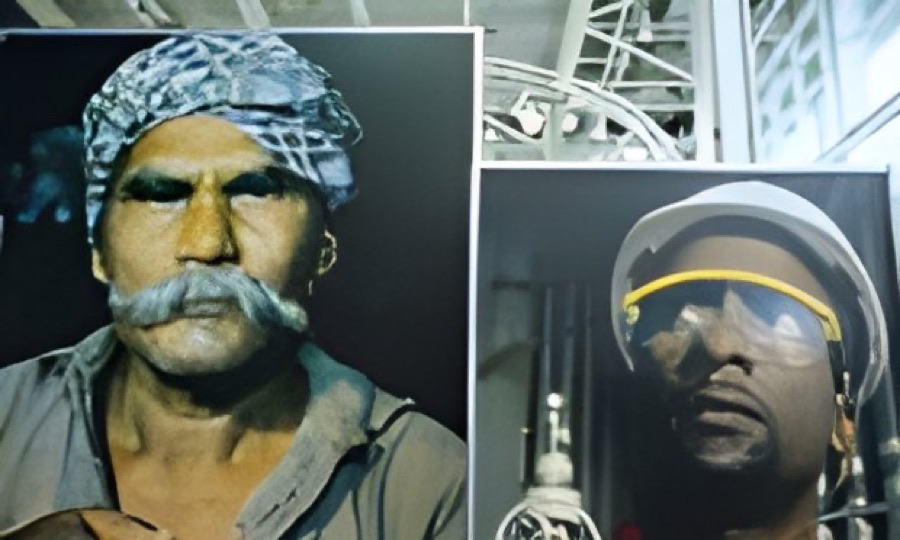
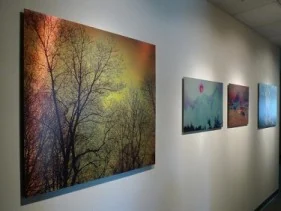
Your questions.
Does orientation change the price?
No, not for the sizes on our list. A 40in x 30in print costs the same either way up.
Can a canvas be hung either way?
Not unless it was designed for that, as the image has one correct way up. A stretched canvas can be fitted with hangers to suit the direction you choose.
What should I do with a portrait phone photo on a wide wall?
Either crop it hard, if the image allows, or use it as one of two or three prints side by side, which together fill the width.