
PVC or mesh on scaffolding
For most scaffolding, specify mesh. Solid PVC only makes sense on a small, sheltered or very short job, and even then the scaffolder has the final say.
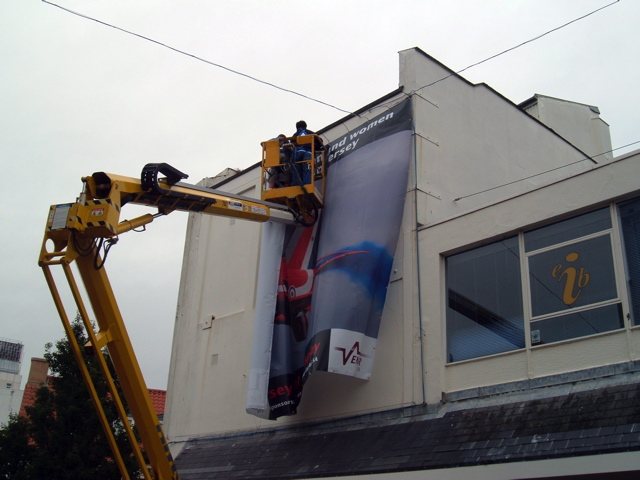
Mesh by default, PVC by exception.
A scaffold is a temporary structure designed for particular loads. A solid sheet tied to it acts like a sail, and every gust travels through the ties into the tubes. Mesh is perforated, so some of that air passes through. It reduces the force on the scaffold, but it does not remove it.
Speak to the scaffolder first
This is the step that should come before any choice of material. Adding sheeting or a banner can change the loading on a scaffold, and the design may have to take that into account. Ask your scaffold contractor or the site's principal contractor what can be attached, where and how. We can tell you about the banner. They have to tell you what the structure can take.
The factors, side by side
| Factor | Mesh | Solid PVC |
|---|---|---|
| Wind | Lets some air through | Catches the full force |
| Exposed or high sites | The usual choice | Rarely suitable |
| Image quality up close | Dots and holes show | Solid and crisp |
| Seen from across a street | Reads well | Reads well |
| Daylight for rooms behind | Some gets through | Blocks it |
| Lit from behind at night | Can look see-through | Stays opaque |
When solid PVC can work
- A small banner low down on a sheltered elevation
- A short stay, such as a launch, with the scaffolder's agreement
- A message read at close range by people on the pavement
- Scaffold that is already sheeted or enclosed
For those smaller pieces, our list gives PVC banner prices up to 60in x 40in. Anything bigger, and any mesh, is quoted per job, so send your dimensions. Our scaffold banners page covers the whole process.
Designing for mesh
The surface has lots of small holes, and those break up thin type, hairlines and tiny logos. Mesh is a distance material, so think big: one short message, one strong image, high contrast. Check it by shrinking your artwork to the size of a stamp on your screen. If you can still read it, the mesh version will work from over the road.
What people forget
- Who lives or works behind it? Windows behind a banner lose light and views. Talk to them before it goes up.
- Consent. A large advert on scaffolding may need advertisement consent, so ask your local planning authority. Rules vary, and a wrap that hides works is not always treated the same as an advert.
- Fixing points. Eyelets and hems take the load. Tell us the spacing the scaffolder wants. See our notes on hems and eyelets.
- Who fits it? Work at height is a job for trained people. Arrangements are agreed in your quote.
- The way down. Plan removal as carefully as installation, and agree who is responsible for it.
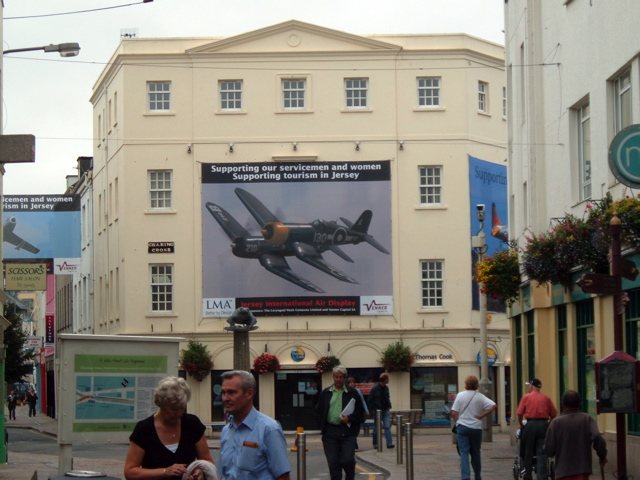
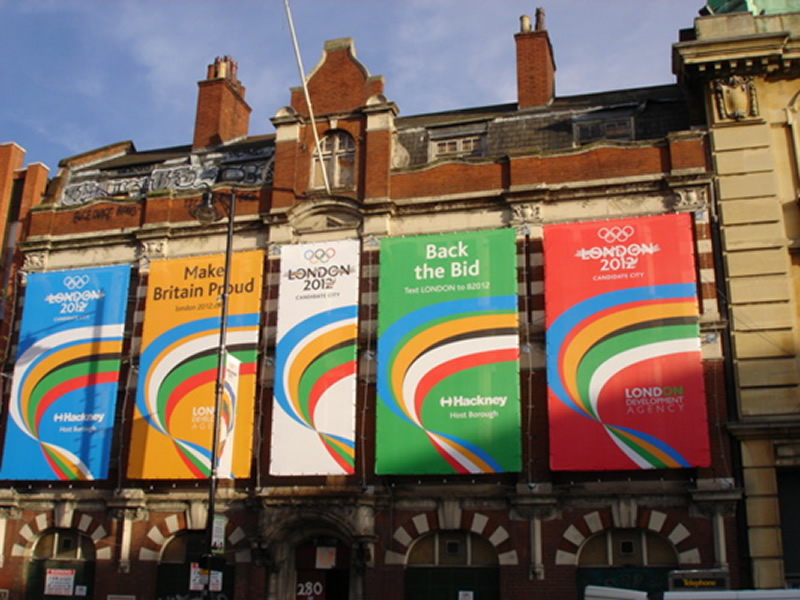
Big graphics on buildings.
Your questions.
Does mesh make a banner safe in any wind?
No. It only reduces the load. The fixings, the structure and the site all still matter, so follow the advice of whoever designed the scaffold.
Can you cut wind slits into a PVC banner?
Slits are sometimes suggested, but they weaken the material and spoil the image. On an exposed site, mesh is the better answer.
Can a scaffold banner be reused on the next site?
Sometimes, if it is undamaged and fits. Plan the artwork without dates and ask us about how the banner is finished if reuse is the aim.