
Pop-up or modular display
A pop-up is simpler and usually costs less, provided your stand is about the same size at every show. When the space changes from one show to the next, look at modular.
The calendar makes this decision.
Forget brochures for a minute and write down your next twelve months of events, with the stand size next to each. That list will tell you more than any feature comparison.
Two firms, two calendars
Imagine a firm booking three shows: a 3m x 2m shell scheme in spring, a 6m x 3m open stand in autumn, and a small corner space at a local expo. One pop-up looks right for the first, feels lost on the second and may not fit the third. A modular kit could be built out as one long wall for the big stand and a shorter return for the small ones. Now imagine a second firm that takes the same 3m x 2m space at four shows. A 3x3 pop-up does that job every time, with no drawings needed.
How they differ
| Pop-up | Modular | |
|---|---|---|
| What it is | One folding frame with magnetic panels | A kit of frames and panels joined in various ways |
| Size flexibility | Fixed once bought | Rebuilt to suit each space |
| Set-up | Quick and simple | Slower, and needs a plan |
| Who builds it | Your own team | Your own team if trained, or an installer |
| Storage and transport | One wheeled case | More cases, often a van |
| Add-ons | Limited | Often shelves, screens or counters, depending on the system |
| Up-front outlay | Usually lower | Usually higher |
Questions for your team
- Who will be there on build day? A pop-up suits the marketing manager who arrives with a colleague and a taxi. Modular needs someone who has built it before, or at least a clear plan.
- Where will it live? A cupboard takes a pop-up case. A modular set may need proper storage, and that is an ongoing cost.
- What goes on the stand? Screens, shelves and heavy products need a structure designed to take them. Check what any system can carry before you plan to hang something on it.
- How often does your message change? Both take new graphics, but modular panels can be swapped individually, so you may only need to reprint part of the stand.
If you already own hardware
Do not assume you have to start again. Existing frames can often take new graphics, as long as we have the maker's details and exact panel sizes. See our guide to reusing display hardware. Compatibility has to be confirmed before anything is printed, since panels from one system rarely fit another.
Our advice
If you are new to exhibiting, start with a pop-up and learn what you really need. Modular is worth the extra planning once you know that stand sizes will vary, or you want a more built look. For the specifics of a system, talk to us about modular displays with a floor plan in hand. We will confirm what can be supplied in your quote.
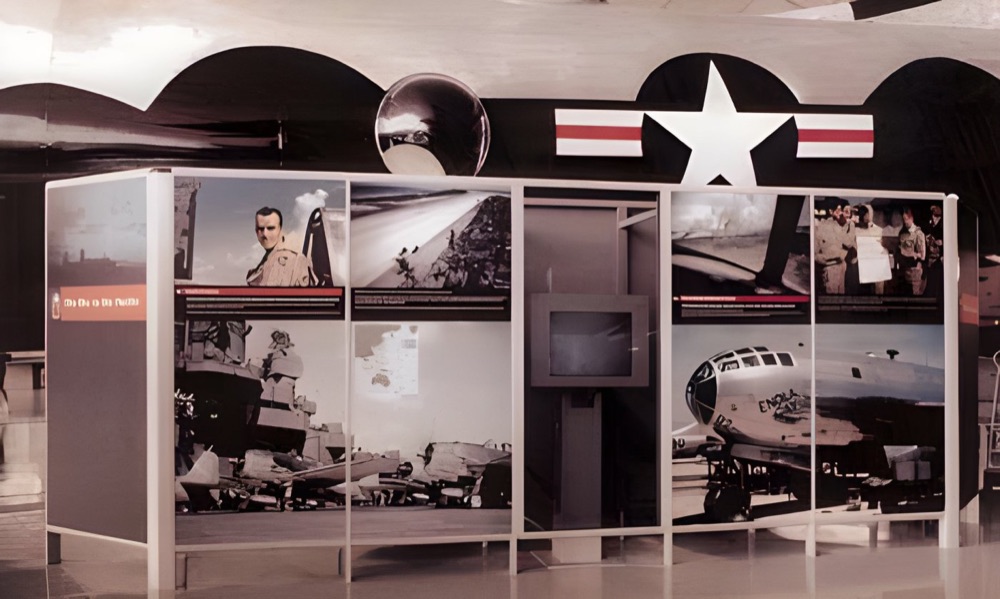
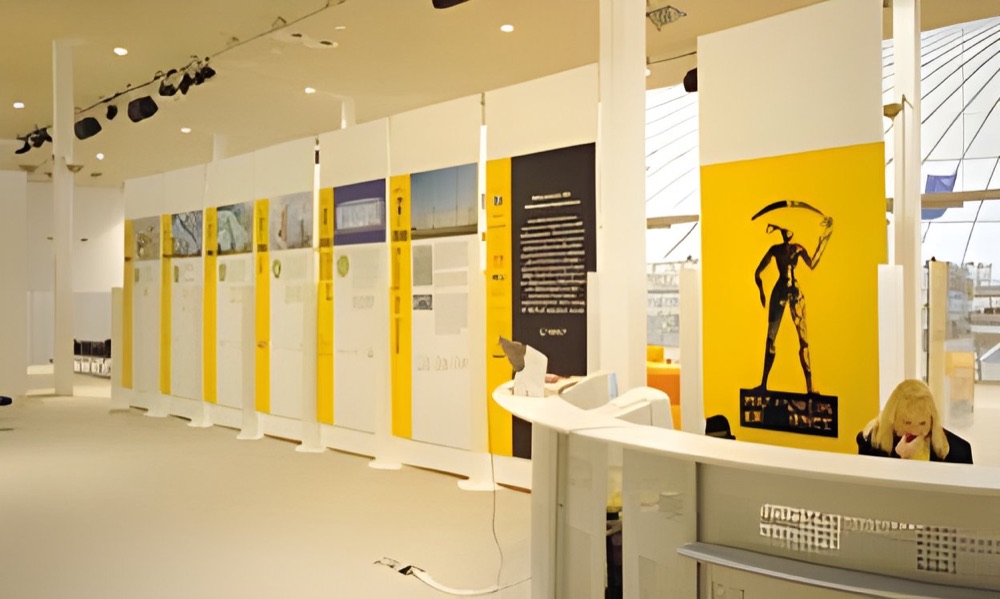
Stands of different sizes.
Your questions.
Can a pop-up be extended later?
Not in the way a modular kit can. Some people add a second unit or roller banners, but a single pop-up is designed to stay the size it is.
Does a modular stand need an installer?
It depends on the system and the scale. Small kits can be built by a trained team, while larger ones are often handled by an installer. Any arrangements are agreed in your quote.
Can modular panels be used for an office display as well?
Often, yes. That reuse between events is one of the reasons people choose it, so mention it at the start.