
Drum scan or flatbed scan
A drum scan is worth paying for when you plan a big enlargement from film, or the shadows matter. For reference copies, family albums and modest prints, a good flatbed is usually enough.
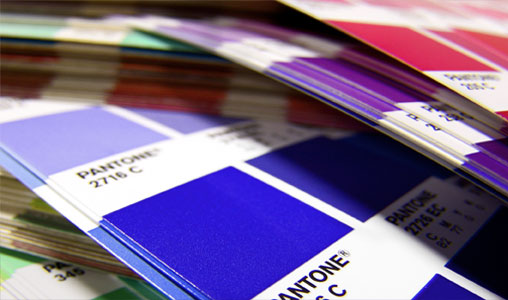
Big enlargements are where the extra money goes.
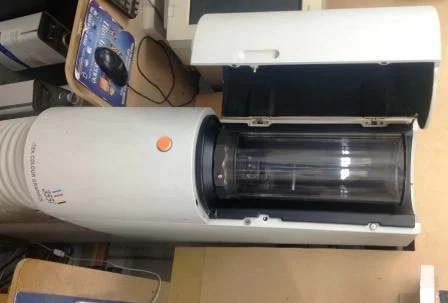
A flatbed moves a sensor under your original, reading a line at a time through a glass plate. A drum scanner fixes the original to a clear cylinder, spins it and reads it point by point through photomultiplier tubes. In practice, the drum holds more detail in dense shadows, and is less likely to lose the fine structure of the film.
We should be clear: drum scanning is the service we offer. If a flatbed will do for your purposes, you do not need us for this step, and it is better that you know that.
Which one fits your plan
| What you are doing | Enough? |
|---|---|
| Sharing old slides with the family | Flatbed |
| Prints up to a modest size from medium or large format film | A good flatbed may do it |
| Exhibition print from 35mm film | Drum scan |
| Dark, dense transparency with shadow detail | Drum scan |
| Limited edition sold to collectors | Drum scan |
| Thick or rigid original, such as a painting on board | Neither: it needs photographing |
The sum for a 35mm frame
A 35mm frame is 36mm wide, which is about 1.42 inches. Scanned at 8,000 dpi, that gives about 11,300 pixels across. At 150 pixels per inch, those pixels would stretch to around 75 inches of print width. The same frame at 2,400 dpi gives about 3,400 pixels, or roughly 23 inches at the same setting.
Be careful with that sum, though. A scanner's dpi only counts if the detail is really there. Film grain and focus set limits, and the figure on a flatbed box is often well above the detail it can actually resolve. So treat dpi as a starting point, and judge the result by looking at it.
Your original has to suit the drum
The film or print has to be thin and flexible enough to fit around the cylinder, so rigid pieces cannot go on. Anything brittle or damaged needs to be seen first, because it will be handled. A flatbed is gentler in that sense, as nothing is wrapped or mounted.
What drum scans cost
| Original size | Price |
|---|---|
| A7 (74mm x 105mm) | £12.00 |
| A6 (105mm x 148mm) | £15.00 |
| A5 (148mm x 210mm) | £20.00 |
| A4 (210mm x 297mm) | £25.00 |
| A3 (297mm x 420mm) | £30.00 |
Guide prices from our price list. They exclude VAT and delivery and assume print-ready artwork.
Larger originals can be scanned at up to 8,000 dpi, by phone quote. For film, read drum scanning negatives or drum scanning transparencies. If your best scan still seems soft, the limit may be the original.
A good way to decide
Pick your single most important frame and have it drum scanned. Compare that with your own flatbed scan at the size you want to print. If you cannot see the difference at your viewing distance, keep the flatbed for the rest.
Scanning equipment close up.
Your questions.
Do you offer flatbed scanning too?
Our listed service is drum scanning. If you think a simpler scan would do the job, ask us, and we will tell you honestly what we would recommend for your original.
Is drum scanning safe for old film?
Tell us about its condition first. Film is handled and mounted during the process, so fragile or damaged originals need assessing before we go ahead.
Will a drum scan remove scratches?
No. It records what is there, sometimes more clearly. Any repair work is a separate retouching step.